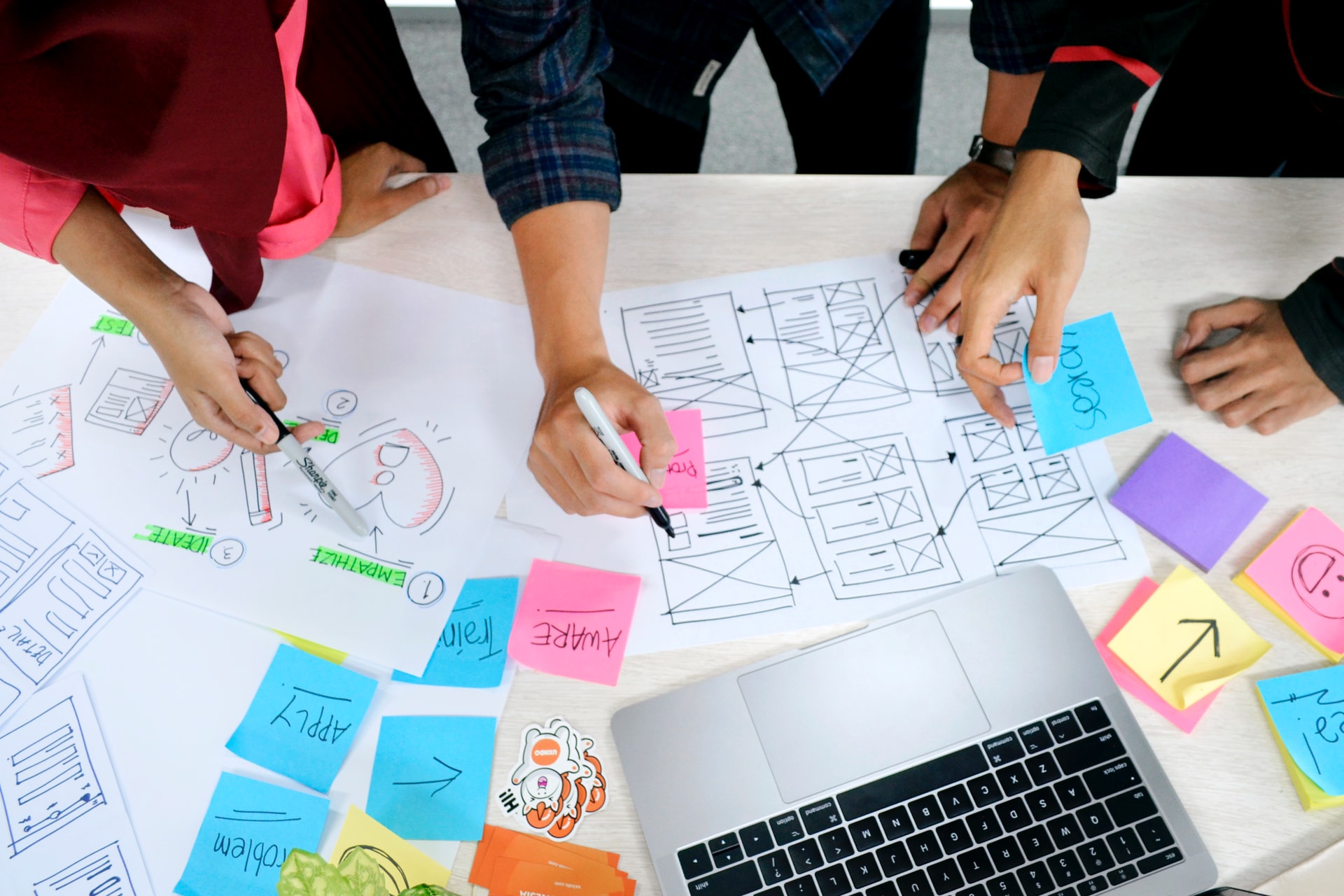
OLPC GrassCon
Watching the GrassCon
This morning's Technology Salon covered the legal hurdles facing mBanking - using your cell phone to interact with your bank account - in developing world scenarios.

The three general models presented provide a good structure for seeing how mBanking is being approached. First is banks adding mobile services as value-adds to their current customers. This is seen often in more developed situations, and is not intended to target the unbanked or new customers. Second are banks specifically seeking new customers (who do not currently have any bank account) through tailored mobile banking. Finally, we see Mobile Network Operators - MNOs - adding mBanking features to their services.
The technical problems will not surprise anyone who's dealt with mobile phones - differing technical requirements and interoperability (of the phones and of the networks). Basic (and therefore, cheaper and more common) phones do not have much to offer for security -- obviously a tough issue if there's to be reliable financial transactions. More advanced phones have the unfortunate downside of being more susceptible to virii and malware. Plus most banks are not particularly invested in having a shared platform, as they would prefer to create proprietary solutions discouraging users from switching banking providers.
The regulatory and legal problems are largely unsurprising as well - how can you "prove" in court that the requested mBanking transaction was approved by the user - is an SMS admissible evidence? Does the country even have an eSignature law to enable electronic authorization? There are massive consumer fraud protection issues, banking regulations (does a mobile provider have to maintain liquidity in case of an "mbank" run?), not to mention which department or ministry of the government will oversee the laws - will it be the technology/IT ministry or the Finance ministry? Once you also enable cross-border transactions, you have to also be very careful of anti-money-laundering (AML) rules, which is all the more difficult with the specific base of the pyramid target market who could best benefit from mBanking, but who may not have a verifiable home address in any normal sense of the concept.
The silver lining to all these problems is that most of them can be addressed through decent regulations - but naturally that presents its own challenges. Regardless there's strong value (e.g. tax revenue for the government) in formalizing the multi-billion-dollar informal economies that mBanking could help with, so there's pressure to create technology neutral but bank-policy-regulated laws that balance usefulness, consumer protection, and limiting monopoly growth, but whether those will overcome the resistance to other problems, including created currencies like cell phone minutes as value (or Final Fantasy codes).
There are huge promises in mBanking for the BoP market, without a doubt. Artisans, small farmers and the like could get paid remotely for their work, and could get commissions or advances for specific tasks. However, the technology and the regulatory framework need to be, in combination, bulletproof and safe for consumers to use without fear. In the case of MNOs being the bank; they must be required to act like a bank in terms of insurance and liquidity. In the case where the MNO is merely a passthrough to the bank, both the MNO and the banks must be able to prevent fraud and crime, provide risk management strategies for themselves and their customers, and find some reasonable transaction security. The governments must be involved creating a strict but not stifling regulatory framework that protects against predatory practices, fraud, and overly rampant capitalism and monopolistic tendencies.
Someone's stealing my best ideas
Wayan found a gem in the Times of India article on OLPC and World Bank funding:
Later this year, the XO laptops are expected to hit the retail stores. Sources say Reliance Communications, which partnered OLPC Foundation to conduct an XO pilot project in Maharashtra last year, is looking at retailing these laptops bundled with its CDMA modems.There are two game-changing ideas dropped innocently in that one paragraph - retail sales and CDMA modems - the key ingredients, I believe, in creating a base of the pyramid market in ICT devices beyond just the cell phone (no offense to the cell - now the most ubiquitous communications device not part of the human body in history, but it does have some platform limitations). As I wrote in my entry discussing a "base of the pyramid" approach for the OLPC:
The same entrepreneurial idea can feed development, using the OLPC technology instead of (or possibly in addition to) cell phones and PVs. Set up a group of in-country micro-lenders who can walk someone through the usage of the OLPC XO laptops, evaluate requests for laptop loans with local situational and social knowledge, and help with initial setup. Provide micro-loans to individuals with an idea of how to use the laptop in a way that could generate enough revenues for repayment and self-employment. Work with local social customs and systems to find the best way to create social pressure for loan repayment (only x amount of money is available on a rotating basis?), as well as adapt to local markets and needs.So the technology is powerful when you combine the pieces of the rugged and portable XO laptop, off-grid power capabilities, and a cell-network Internet connection. The only piece lacking is the business model to repay the loan for the laptop, modem/power marginal costs, and make a living, but in a few minutes I was able to come up with the list below back in March:
Below are a few ideas (presuming some form of Internet, probably cell-phone-network enabled) that could combine the OLPC, community development, and education with making a bit of profit. There are a million other possible things to do with the laptop, using its built in hardware and software tools as well as adding other open-source software to it, so this is by definition an incomplete list. Only local agents can really know what the local demand for OLPC-related services would be, so take these as very basic, generic ideas:
- Youth could create radio programs with local advertising -- youth gain experience in writing, public speaking, budgeting, aspects of radio operation (physics lesson on radio waves?), as well as marketing. Local industries could advertise goods during their radio program, and this isn't even getting into the FOPSE (For-profit Social Enterprises) possibilities like the LapDesk.
- The OLPC could be used as a traveling/home-visit cybercafe and "digital office" (some tasks might require a portable printer as well) to provide services like:
- Letter/resume transcription and/or typing
- Contact (skype/voip with family abroad?)
- Interaction with eGovernment services
- Access to current market prices for locally produced goods
- Manage an eBay store of artesania / handcrafts
- Remote basic medicine and consultation with urban-based doctors
- Of course, email/chat/web surfing/entertainment and the like if there's a demand for such services
- Schools (or other groups) could offer the public training and adult education -- the laptop is built to support education; so it's an ideal machine to support training in basic computer skills (typing, mousing, etc.); literacy and numeracy, and so on.
So I hope that the Times of India article has their facts straight, and I hope someone's reading -- and implementing -- our thoughts here and at OLPCNews.com.
So, this weekend I thought it'd be a great time to upgrade to the latest joyride builds, which are rumored to have solved the earlier record problems, and hopefully the SD card corruption issues as well. This is supposed to be an only-mildly-painful experience, with a few command line tricks, a few boot tricks, and so on. Nothing serious.
Now, I use my OLPC for about 4 main tasks - taking notes, checking email/Internet, playing Implode, and watching movies on planes (and TED talks on the Metro!). All tasks I find the XO to excel at, frankly - it's light yet rugged enough to always carry, and with the great wifi reception and sun-readable screen, it's rare that I can't make full use of the XO; whether I'm at the park, home, or near anyone with an open wifi connection.
Booting into the new joyride build I find many improvements to the UI and network views, some that were interesting but neither exciting nor bad, and that mplayer doesn't work for me. In fact, it causes a hard crash. Same with Record, Measure, TamTam.... basically anything fancy. The activity loads, but whenever it tries to actually play the video or activate the camera or mic, it freezes. The wifi lights continue to flicker, and the battery light will change state, but no keyboard or mouse response.
I thought this was an unfortunate joyride issue, and restored back to 703 using olpc-update; same problem. I then did a secure reflash from USB (twice!) and tried an olpc-update from there to restore functionality, but no luck. Booting into open firmware and running test /camera provided a moving camera image, so it's not (thankfully!) a hardware problem; and I don't think it's the activities themselves (I downloaded a Record from the Activities page to test). If I had to guess, I'd think it was a driver/module problem or at the X level, but I'm not familiar enough with Linux or Sugar to really diagnose or fix that.
I continued to muck around in discussion with some folks on the irc.freenode.net #OLPC-help channel, and sent an email into the support gang at laptop.org. cjb suggested I try yet another reflash, starting from a completely blank slate - reformatted USB stick, dowloading a new image, everything. The second time I tried that, it magically took and started working. Continued discussion with the support gang indicated that sometimes the reflashing doesn't fully take, especially when going backwards in builds.
Needless to say, I might wait a while before going on another joyride.
"Despite its flaws, Just Another Emperor does a superb job of fulfilling Edward's main intent - deflating the hype around philanthrocapitalism without denying it its place as a tool for combating poverty. Edwards reminds us that the free market cannot solve all social ills and inequalities. While noting the benefits of approaches championed by social entrepreneurs and venture philanthropists, he suggests that these movements complement - rather than replace - non-market-based approaches to poverty and sustainability."
Edwards makes the strong argument that
"The philanthrocapitalists love handing out new prizes-for building private spaceships and electric cars, sequencing the human genome, and ending global warming-but not for the [Swan Lake Fire Department] Ladies Auxiliary or reviving New Orleans."
The NextBillion writers respond to his basic point - market solutions only address a limited scope of attractive projects:
For example, a market-oriented development model might address the issue of rural access to energy by promoting an enterprise that sells low cost solar panels. A more traditional civil society organization might work to build a grassroots network of groups that call governments out for favoring urban over rural populations in the distribution of public resources.
Naturally both Edwards' favored civil society, as well as social entrepreneurship, are both tethered to traditional development models through grants and policies, so neither is wholly ground-breaking.
Edwards notes that "There is no place for triumphalism in this conversation." - I think that can go deeper; there is no place for triumphalism in development approaches. In some cases, governments and educational ministries/departments will be the best able to address a problem, sometimes civil society, communities, and NGOs, and sometimes the marketplace itself. One of the long-standing problems I've had with traditional development models is the one-size-fits-all approach it is prone to. Combine that approach with lenders without accountability for bad loans, and you have a collection of projects; some good, some disastrous failures, but all being pursued in a one-minded way. Perhaps big infrastructure projects should sometimes be government-funded, but sometimes perhaps the private sector can also help (and provide long-term sustainability to boot!) Sometimes local NGOs are the only way to achieve long-term change from the bottom up. There's a place - a potentially large and powerful place - for the private sector to address, help, and still profit from the base of the pyramid. That doesn't mean that all development work should, or even can be private-sector led.
There's a lot to change globally to create a better world, and we should work on providing an inclusive model to work with and support anyone who thinks they can lend a hand instead of fighting turf wars for the dominance of any one approach.
I wrote about this general problem first in a long and academic paper when OLPC was still selling in only lots of a million laptops and only to governments. I railed on OLPC for missing the importance of the small but well supported projects in favor of unmanageably huge (but big-number) projects, and proposed a solution -- peer networks of small schools, governments, and any other interested parties banding together to be able to meet the minimum order.
The original problem has evaporated as the former launch partners never came through with their promises, as Nicholas Negroponte discussed at TED last winter, and the project has moved to smaller installations which have been difficult enough to manage without an implementation strategy.
Naturally, my original peer-network idea has a ton of complications -- this mixed bag of organizations has to overcome coordination problems, be able to effectively and timely communicate (involving both language issues and technical connectivity issues), address financial (and money-sharing) problems, and in general be well enough organized internally, as well as a group, to make this happen. Luckily, the creation of that social network and trust building is similarly important in the support of a laptop program once the laptops get delivered -- the participants can share curricula, best practices, technical peer support. The technical obstacles they had to overcome imply that they have some connectivity (and, probably, access to electrical power), and whatever fund-raising they were able to do to afford the laptops will also (hopefully) mean that they have sustainable support from their communities. This general concept was tried by the IADB in a top-down fashion, as they negotiated an agreement putting a handful of Central American countries together on one bid, but as far as I can tell that was a non-starter.This is all a long-winded way to get back to our current problem; individual funders and NPOs/NGOs who aren't able to or are even interested in enough laptops to use the Give Many program, but a growing support network for grassroots OLPC programs in the "Post 1CC" era.
Also, we have the potential for arbitrage courtesy of eBay to catch some of the slack. OLPC XO-1s have been selling at close to $300 on eBay since since Day 2 of the original G1G1 (actually the price has been in decline since G1G1 it seems).
At Give 1000, the cost per laptop is $260 - that's just 10 programs wanting 100 laptops each. $26,000 isn't chump change, but it's cheaper than any other way to get 100 laptops for a school, community or organization. We know that Ken Hargesheimer wants 150 XOs, and I'm sure there could be homes for 850 other XO laptops at $260 each (with some additional shipping overhead to re-distribute the lots). And of course, until G1G1 returns (rumored to be September) you could potentially eBay a few unwanted XOs...
Is this realistic? Are there enough interested-but-frustrated parties to assemble an order for 1000 XOs? Would OLPC take offense at this slightly tricky order? Is the random 3-6month order delay acceptable for the potential buyers?
In thinking about eBay in my post on tricky ways to "Give Many" OLPC XO laptops, I was reminded about something that has bugged me for a very long time about eBay.
eBay is sitting on a vast goldmine of data that for the longest time I wasn't sure they realize they have. eBay knows the market price of just about anything, from a soul (well, not anymore) to random and weird goods to a pretty specific hardware-configuration of a used laptop. Even more, they know the market price for these items over time.And their data on these market prices is good, and well-accepted. It's standard practice in the nonprofits I've worked with to check the "fair market value" for donated technology by searching for something similar on eBay in order to provide a tax receipt to the donor. And naturally the price itself is the market price because, simply put, eBay is the market for these goods.
It looks like they do provide a set of this data (for a price) as part of the eBay Market Data Program:
The eBay Market Data Program offers rich consumer insight data about what is purchased on eBay and who is purchasing it. Access to this business intelligence can help you make effective buying and selling decisions for your business, regardless of whether you do business on eBay or outside of the eBay Marketplace.
Now, I'm not sure what the next step really is. I'd love to know if eBay would make a subset of this market data (scrubbing personal information out, naturally, but price, sale date, item description, and bidding history) available for free. I'm sure some stats folks would love it, as would market researchers and social scientists in general. I'm sure there are millions of interesting questions to ask and visualizations to create using such data, and there would still be a value-add for the paid version. They have a free non-commercial research API available through Data Unison, it seems, but I can't tell how much data is available through the system (it seems to only cover the past 30 days).
You might remember the Youtube video of this guy named Matt who did this silly dance and captured it on video everywhere he went a few years ago?
Well.. he's back, with friends.
It's a good video to watch when you worry about things like war, unfair trade practices, poor foreign policy, dictatorship, and so on -- it reminds you that people are globally friendly, silly, happy folk if given a chance. Which is always true, but not always easy to remember.

It was a fascinating discussion. I'm a strong supporter of sustainability (otherwise, why bother?) and Al Hammond gives a passionate and convincing argument for the central role of business in creating sustainable solutions. Talking with him beforehand, he mentioned (paraphrasing heavily) comparing the measurable benefits of the past five decades of foreign aid versus the last decade of private sector mobile phone rollouts -- the long-term benefits greatly favor the mobile phones.
I can only imagine that once mBanking really gets rolling, all doubt will be erased that the cell phone has helped the Next Four Billion more than 2.3 trillion dollars in aid. My mind quickly out-paces itself when I begin to ponder mBanking benefits for everyone from rural artisania workers able to take and receive payments for commissioned artwork to p2p payment systems to direct-to-market agricultural benefits...
Now, I have a few outstanding doubts about some parts of these two plans - some scalability and malicious-user problems with the Vietnam model, and some privacy and franchise-enforcement questions with the healthcare idea. Now, I have fewer doubts on both of these concepts, combined, than, say, the OLPC Project (though I strongly believe that a base-of-the-pyramid approach to the OLPC could work well). The huge difference between a BoP, market-driven approach and traditional development is that investors bear the brunt of failed projects, a pleasant change from the recipient country being in deeper debt regardless of the outcomes of debt-financed aid projects. I think traditional development will forever have a role in humanitarian and post-conflict aid, but in infrastructure and service creation, the BoP, private-sector approach will prove long-term much stronger than pure-play foreign aid programs, for the simple reason that it applies reasonable risk management to development projects. What a concept!
Without further ado, my full meeting notes after the jump...
Continue reading "Technology Transformations for the Base of the Pyramid by Al Hammond" »
XO laptop owners need more jabber servers to mesh network on. Every time I look at my empty neighborhood view I am sad. Yet I am not geek enough to run a jabber server solo. I need the help of a jabber expert to set one up for DC.
The super nice folks at Obscure.org set up a jabber server for the DC area, and there are many other community jabber servers listed at Laptop.org wiki list of community jabber servers. Any one server can only handle up to ~150 users at a time, so please choose your community's server (if your community doesn't have one, try setting one up, or contacting Harper Reed of XOChat.org for an XOChat regional server)
This means that you can use it to chat (or share other activities like write or browse!) with other XO users whenever you're connected to the Internet, instead of waiting until they're in range to interact via the mesh.It takes a few seconds to set up via the sugar control panel, and works amazingly well. The process is documented over in the OLPCNews forums, and I've included the short-and-sweet instructions in the full article (click below).
Jabber servers can get overwhelmed by too many users, so make sure you connect to one that's near to you (or set up your own Jabber server for your local OLPC users group!) . If you're in DC however, this is a call to action to sign on to dc.olpc.obscure.org, share chat activities and create some online meshy XO community love! Setup instructions, server information for the rest of the world, and some tips and tricks after the jump.
The Associated Press has been rattling sabers of bloggers quoting (even with credit and links) from AP articles, claiming that any quote longer than 5 words costs money:
the AP had a long history of quoting more than 100 words from bloggers -- and not even linking back to the original blog. Now, in a bit of ultimate irony, the AP's own article about this brouhaha quoted (without linking) twenty-two words from TechCrunch. That's 18 words more than the supposed four word "limit" the AP has suggested. With an ironic chance that wide, TechCrunch's Michael Arrington couldn't resist, and asked his lawyer to send a DMCA takedown notice to the Associated Press, along with a bill for $12.50
(via TechDirt)
You can read TechCrunch's hilarious take on this as well, but I'll refrain from quoting them based on their feisty legal department.
The DC area mailing list for nonprofit technologists has been alight with suggestions on what the best portable machine is this past week, debating screen size (gotta be able to see that spreadsheet!), storage, raw computing power, optical drives, and even the need for floppy swap drives.
The general sense is that everyone wants portability, but is unwilling to sacrifice anything to get it. I say bollocks -- you can keep your sore shoulders, I'll make a few minor sacrifices, adapt my lifestyle a bit, and carry on. After the jump is my full response.
I'm sure you're tired of hearing me talk about twitter as an innovative and easy tool for outreach and engagement. So listen instead to Amy Gahran and her conversation with the Mars Phoenix rover - via twitter:
This is one of the smartest uses of Twitter for public outreach I’ve ever seen — giving folks a sense of a personal connection to this high-tech mission to find water (and signs of life) on Mars. (Some members of the Phoenix team are also blogging.) I especially like that Mars Phoenix is replying to questions sent in by its Twitter friends (like me).Makes it all seem so much less… alien!
Business Week has a good article summing up the recent history of the OLPC project and it's difficulties with sales numbers, fading promises, Intel, and its internal strife over the Microsoft decision. None of that information is particularly new, but the article continues and goes in to some insightful problems with the educational model of the 1CC OLPC project; namely, hubris.
Hubris is a longstanding problem in development work, as William Easterly (among many others) has been writing about in sordid detail for years. If you haven't read The Elusive Quest for Growth, go to your library or local bookstore now and grab a copy. It's fascinating, disturbing, and clearly written.
The OLPC project has sadly failed to learn from the many, many missteps in large scale, top-down development projects, as we've been writing about over at OLPCNews.com for years now. Without careful implementation working with in-country experts, the project will never come close to fulfilling the original vision, as Peru is revealing:
Even with these results, the Unified Union of Education Workers of Peru, representing some 320,000 public school teachers, is skeptical. "These laptops aren't part of a comprehensive educational, pedagogical project, and their usefulness is debatable," says Luís Muñoz Alvarado, the union's general secretary. Muñoz never had a chance to explore the laptops, though. In what seems an easily avoidable blunder, the Education Ministry has not explained the program to the union.
So in a haphazardly, too-little-too-late fashion, 1CC is piecing together an implementation plan as they go, which makes about as much since as building an airplane in mid-flight:
Recognizing the need to integrate the laptops into communities, OLPC is scrambling to develop guidelines for deployment based on the experiences in Uruguay and Peru, the two countries with the largest distribution so far. The group is also bringing in consultants to advise countries on how to integrate the PCs. One, Edith Ackermann, a visiting scientist at MIT, says OLPC should have involved more educational experts in creating and testing the applications. Instead, she says, "The hackers took over." The result is some programs are too complex for many children to use. "Now we have to deal with this. I don't know if it's too late," says Ackermann.While some critics have called on OLPC to hire aggressively so it can provide on-the-ground support for dozens of countries at a time, Negroponte and Kane plan instead to rely even more on outsiders. They'll forge alliances with local tech companies and nongovernment organizations that will provide deployment support.
That is one move that OLPC is making correctly -- presuming that those alliances are contractually required to help build a shared and open knowledge base that can create a community of practice and body of knowledge that future implementations of similar projects can take advantage of. OLPC hiring internally to do this work can never be as useful as partnering with existing, local institutions who will continue to be around after the OLPC paratroopers move on to the next implementation. It's almost a sustainable plan, and it looks like there's some work to create a set of best practices:
Although each country has a different situation, they can learn from common experiences. OLPC plans on using Haiti, the poorest country in the Western Hemisphere, to test ideas about how to best integrate the computers with society and to create a template for other countries.
The (lack of) implementation plan is only part of the OLPC hubris on this project. Underlying that is the more insidious educational theory level of the program.
While this philosophy is essential to the mission of OLPC, it's also a source of tension. Current educational leaders in Peru embrace Constructionism, but most countries base their education systems on the idea that teachers pass their knowledge to receptive students. That was a problem for OLPC in China as well as India. India's education department, for instance, calls the idea of giving each child a laptop "pedagogically suspect," and, when asked about it recently, Education Secretary Arun Kumar Rath barked: "Our primary-school children need reading and writing habits, not expensive laptops."
Now, you can argue until the cows come home about pedagogical theories, but at the end of the day you must respect a country's sovereignty and right to choose its own educational track. Despite India and China's different approaches, it would be hard to accuse either country of not achieving some impressive educational outcomes and economic growth by following their current path. To close out with a quote by Easterly regarding the OLPC pedagogy, "It's arrogant of them. You can't just stampede into a country's education system and say, Here's the way to do it."
Almost universally, they’ve [OEMs] asked for standard Ubuntu packages and updates, with an app launcher that’s more suited to new users and has the feeling of a “device” more than a PC.The Asus Eee's "basic" mode had a very device-like feel to it and has done reasonably well with it's Xandros Linux backend, and with Ubuntu's star performance as a Linux desktop for the masses, I can only imagine the UX (User eXperience) will be even better, and the review of the current product at Ars Technica sums it up as:
The implementation is, overall, quite ingenious in many ways, but there are still places where it feels a bit clunky. The project is clearly early in its development and we will likely see the rough spots even out as it evolves.
Beyond just a more device-like application launcher and a tabbed window structure; Mark also mentions "two companies that want more radical user interface innovation":
Canonical is participating directly in the design and implementation of one of those UI’s, and we’re integrating someone else’s UI on an Ubuntu base for the second project. I haven’t seen either of those UI’s, for confidentiality reasons, but I’m told that the teams working on them think they have great ideas that will elevate, in different ways, the state of the art.Now, you've got to wonder who those companies are. Could it be Walter Bender's Sugar Labs? Mary Lou Jepsen's Pixel Qi? Sugar is definitely an innovative UI, and PixelQi's tagline is "The future of portable computing is all about the screen," with a strong focus on holistic computer design and user experience. Other candidates could be OEMs like Quanta (which was planning to produce its own version of the XO laptop.
Mark concludes;
All in all it will be exciting to see how the netbook era stimulates innovation in the Linux user experience, because there are a lot of companies wanting to build differentiated UI’s on a standard Linux base. And directly or indirectly Canonical will help to bring that innovation to KDE and GNOME and hence to the wider Linux ecosystem.
With any luck, the 4PC market that the OLPC has helped to create will also spawn a new round of UI considerations which traditional software companies (Microsoft and Apple) will be interested in designing for as well, creating functional but light-weight versions of their OS (WinCE hardly counts, Apple's iPhone OS might be a sleeper candidate however).